Steven Reid
Steven Reid
Self-taught developer and independent researcher building browser software and recursive algorithm tooling.
I am early in my career, but I treat shipping quality, reproducibility, and honest validation as core requirements.

Flagship Projects
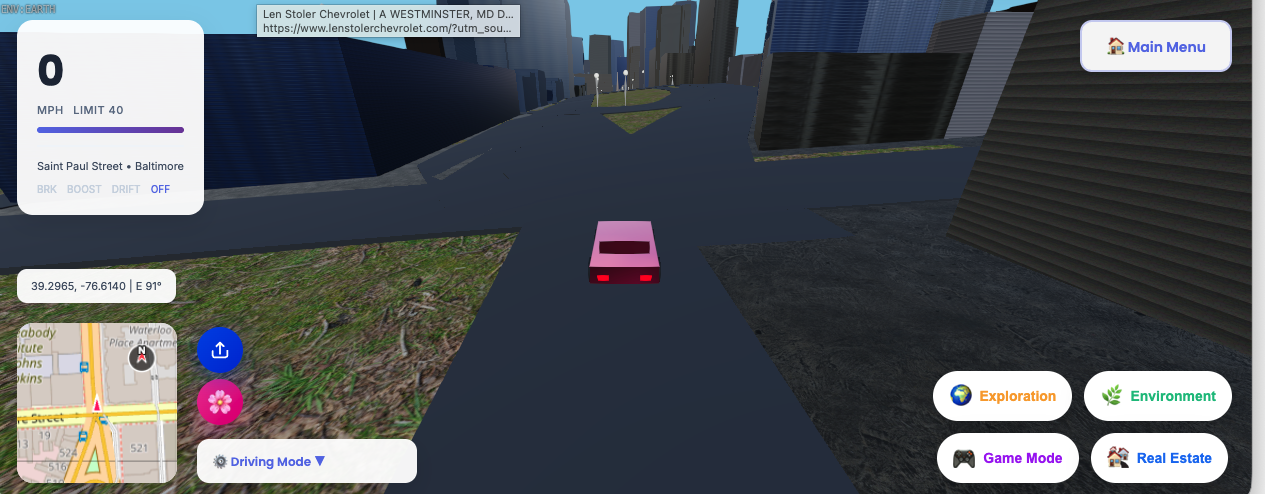
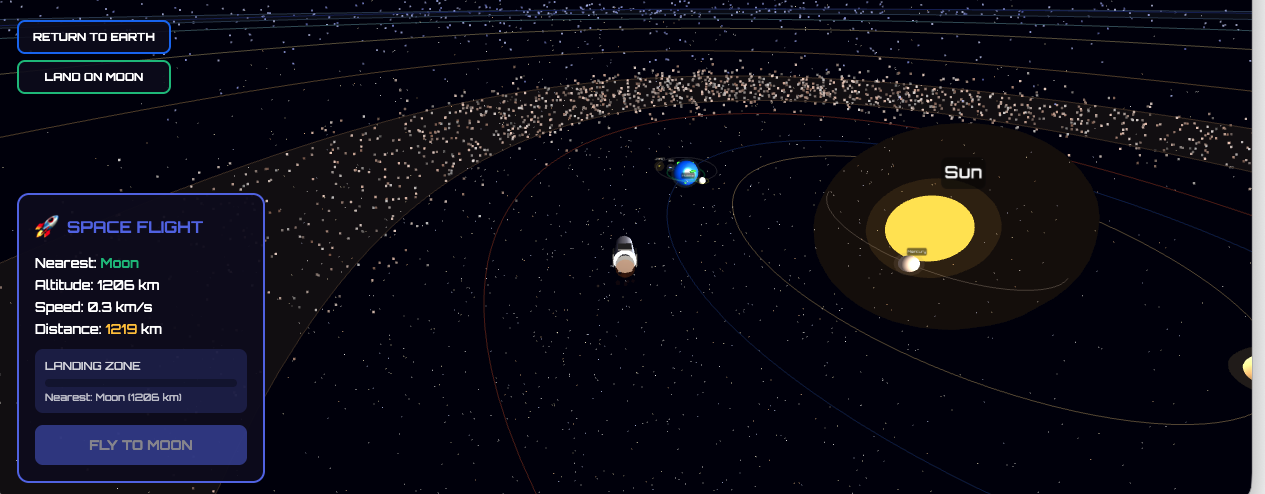
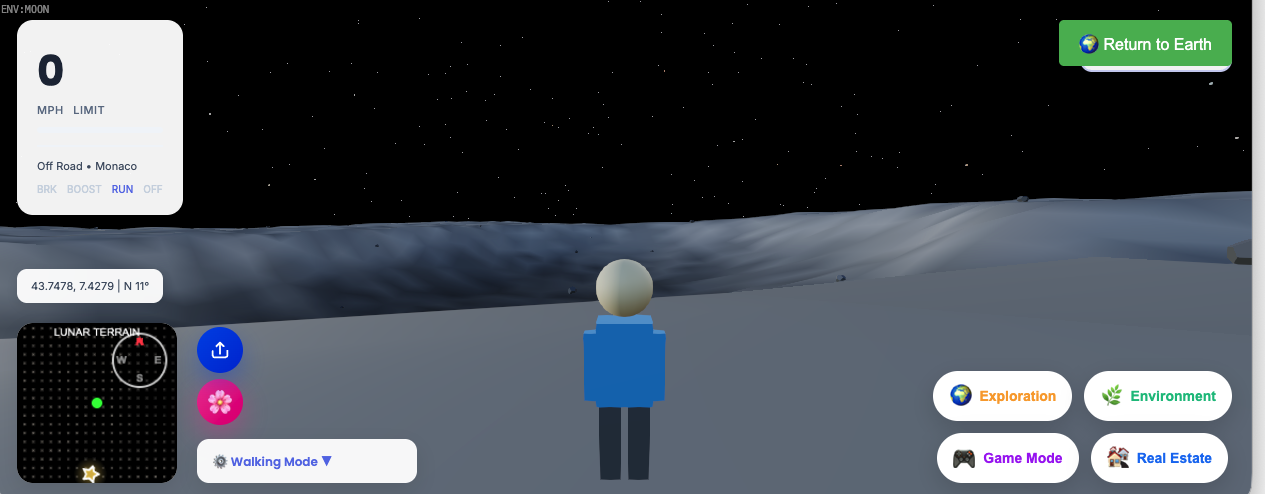
1) WorldExplorer3D
Browser-native geospatial exploration engine with shared multiplayer presence.
What makes it interesting:
- Explore real-world cities directly in the browser.
- Use walk, drive, and fly modes in one runtime.
- Transition from Earth to space to Moon in the same session.
- Join multiplayer rooms with shared presence and social interactions.
Tech stack: JavaScript, WebGL/Three.js runtime, Firebase services, browser-first deployment.
Links:
- Live demo: worldexplorer3d.io
- GitHub: RRG314/WorldExplorer3D
2) LocalHub
Business-facing hub creation platform with public local discovery.
What makes it interesting:
- Businesses can create hubs and publish structured local ecosystems.
- Discovery and reviews are ecosystem-aware, using structured feedback concepts.
- Designed for global access while preserving local relevance.
- Includes demo-first operation with a path to live backend integrations.
Tech stack: HTML/CSS/JavaScript, browser 3D map runtime, optional Firebase and Stripe integrations.
Links:
- GitHub: RRG314/localhub3d


3) RDT Toolbox
Recursive Division Tree toolkit for deterministic hierarchy and indexing experiments.
What makes it interesting:
- Implements deterministic hierarchy primitives around recursive tree structure.
- Includes tree geometry utilities: depth, path-to-root, LCA, and ultrametric distance.
- Built with reproducibility in mind, including tests, CLI workflows, and benchmark reports.
- Research and experimental only. No cryptographic security claims.
Tech stack: Python, CLI + library API, reproducible benchmark/test tooling.
Links:
- GitHub: RRG314/RDT-toolbox

Other Work
- topological-adam: Experimental PyTorch optimizer extending Adam with energy-stabilization terms for training dynamics research.
- rge256: ARX-based PRNG family focused on deterministic, non-cryptographic randomness for simulation and compute workloads.
- rdt256: C-based recursive-entropy PRNG suite with explicit build scripts, benchmark flows, and reproducibility artifacts.
- rdt-kernel: PyTorch nonlinear PDE kernel for recursive diffusion experiments on CPU and GPU.
- rdt-spatial-index: Recursive logarithmic spatial indexing work with benchmarked exact-query behavior.
- rdt-noise: Structured noise synthesis experiments connected to recursive depth mechanics.
- RDT-entropy: Integer shell entropy analysis framework built from RDT depth distributions.
- Recursive-Adic-Number-Field: Ongoing preprint and implementation trail for recursion-based number system constructions.
What I’m Focused On Now
- Making every core repo installable and testable in clean environments.
- Tightening benchmark honesty so claims match reproducible evidence.
- Turning RDT tooling into practical developer utilities with clear docs.
Validation Snapshot (2026-03-04)
topological-adam: clean install and test run passed (73 passed, 2 skipped) after hardening updates.rge256: now pip-installable with native fallback; clean test run passed (7 passed).rdt256: build, validation, and benchmark flows ran successfully from source.rdt-kernel: install and tests passed, and CPU benchmark timing was captured.
Detailed notes: Validation and Testing
Background and Research Links
I study how simple deterministic recursion can produce hierarchy, valuation, and measurable structure.
Much of this line of work centers on the Recursive Division Tree and its computational consequences.
- ORCID: https://orcid.org/0009-0003-9132-3410
- Zenodo publications: https://zenodo.org/search?q=Steven%20Reid
- GitHub: https://github.com/RRG314
Site Sections
Contact
- GitHub: https://github.com/RRG314
- Email:
your-email@domain.com(placeholder)
If you want to collaborate, test a repo, or review claims, I welcome direct feedback and issues.